CBN Retains MPR at 27.5% to Sustain Disinflationary Trend
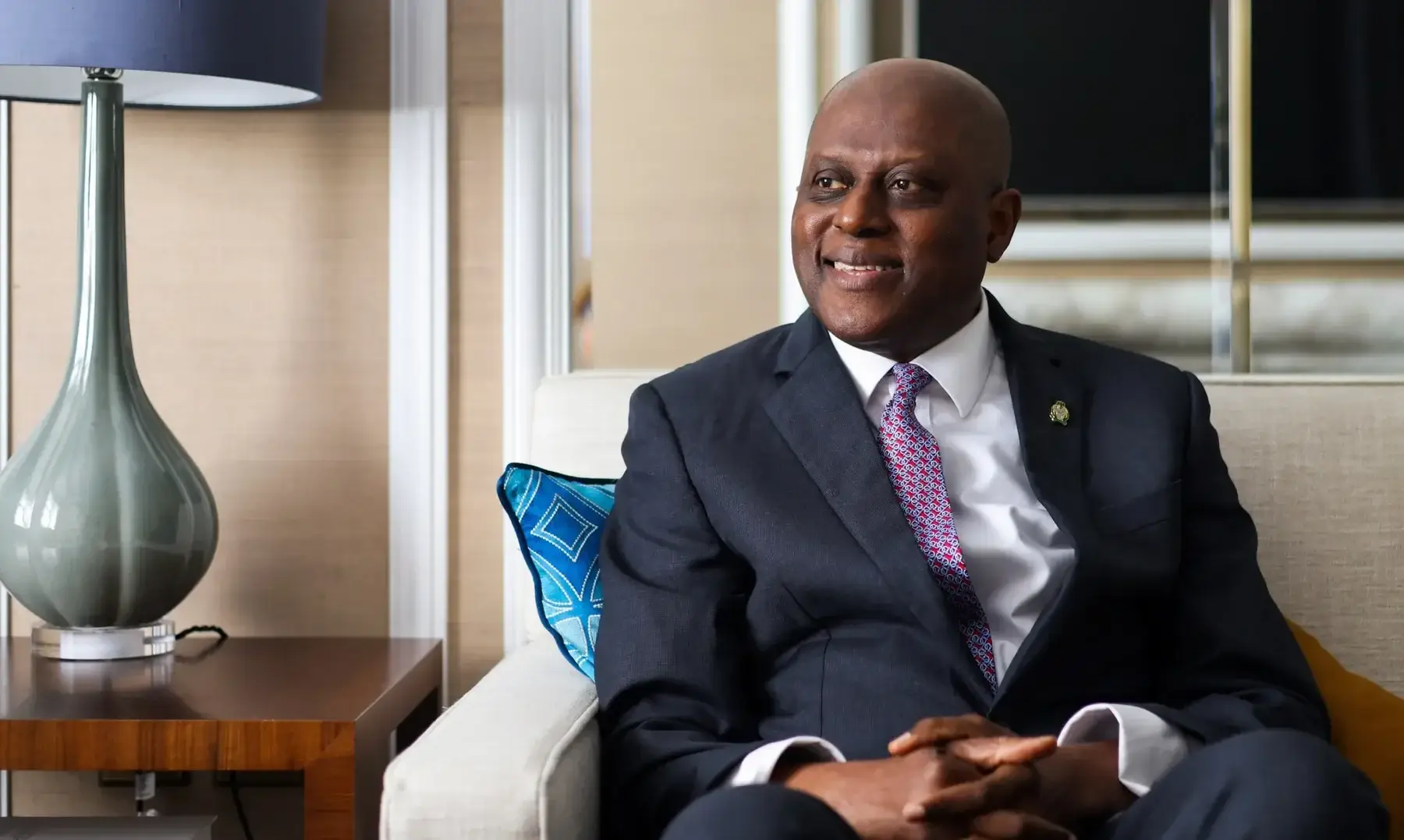
The Central Bank of Nigeria (CBN) has announced the retention of the Monetary Policy Rate (MPR) at 27.5% following the conclusion of its 301st Monetary Policy Committee (MPC) meeting held on Tuesday, July 22, 2025. Addressing journalists after the meeting, CBN Governor Dr. Olayemi Cardoso stated that the committee’s decision was driven by the need to sustain the disinflationary trend and contain price pressures in the economy. “The decision was premised on the need to sustain disinflation and sufficiently contain price pressure,” Cardoso explained, noting the committee’s cautious optimism about recent economic indicators. All 12 MPC members voted unanimously to maintain the MPR at 27.5%, signaling a unified stance among policymakers amid persistent inflationary pressures and exchange rate volatility. The MPR, which serves as the benchmark interest rate, remains a critical tool in the apex bank’s efforts to rein in inflation, which, although slowing in recent months, is still above the CBN’s target range. Key decisions from the MPC meeting include: Retention of MPR at 27.5% Maintenance of the asymmetric corridor around the MPR at +500/-100 basis points Retention of Cash Reserve Ratio (CRR) at 50% for Deposit Money Banks and 16% for Merchant Banks Maintenance of the Liquidity Ratio at 30% Governor Cardoso emphasised that the current policy stance would continue to address both existing and emerging inflationary pressures. “The MPC will continue to undertake rigorous assessments of economic conditions, price developments, and outlook to inform future policy decisions,” he said. Analysts were divided ahead of the meeting, with some expecting a marginal rate hike to strengthen the naira and others predicting a hold decision due to concerns over sluggish economic growth. The decision to maintain rates reflects the CBN’s focus on balancing inflation control with economic stability as businesses and consumers navigate a challenging macroeconomic environment. Other potential adjustments to the CRR or Liquidity Ratio were not immediately disclosed at the time of the announcement. Overall, the unanimous vote underlines the Bank’s commitment to monitoring the effectiveness of current policies before making further adjustments, amid growing concerns about the trajectory of the economy if inflation remains unchecked.
Read More
BREAKING: Nigeria’s inflation rate eases to 22.22% in June 2025
Olalekan Adigun for Nairametrics Nigeria’s headline inflation rate eased to 22.22% in June 2025, down from 22.97% recorded in May 2025. This is according to data released by the National Bureau of Statistics (NBS) on Wednesday. The latest figure represents a 0.75 percentage point decrease, signaling a modest slowdown in the pace of rising consumer prices across the country.
Read More
Stricter lending looms as CBN’s capital restoration deadline ends
As the deadline for the Capital Restoration Plan expires today, analysts warn banks may adopt stricter lending practices, though the policy is expected to stabilise the financial system in the long run, writes OLUWAKEMI ABIMBOLA Experts have projected that the capital restoration plan mandated by the Central Bank of Nigeria to support banks’ exit from the forbearance regime would have a short-term credit-tightening impact but lead to stability in the long term. Last Monday, the apex bank, in a circular signed by the CBN Director of Banking Supervision, Olubukola Akinwunmi, said the Capital Restoration Plan would complement its other measures, which include termination of forbearance exposure and Single Obligor Limits waivers, suspension of payment of dividends, bonuses, and investment in foreign subsidiaries for affected banks. CBN stated, “All affected banks are required to prepare and submit a comprehensive Capital Restoration Plan to the CBN on or before the 10th working day following the end of the quarter with effect from June 30, 2025. “The plan should detail the management’s proposed strategies to restore full regulatory compliance, including (but not limited to) cost optimisation initiatives, risk asset reduction, significant risk transfers, and necessary business model adaptations. The plan must cover the entire period until full normalisation of capital and asset quality indicators is achieved.” The deadline for submitting the Capital Restoration Plan is Monday (today). In addition, all banks are now required to submit quarterly disclosures, effective June 30, 2025, relating to a detailed provisioning status and reconciliation of affected credit exposures, CAR calculations with and without transitional reliefs, classification migration data for restructured or impacted loan facilities, and comprehensive disclosure of Additional Tier-1 instruments, including issuance terms, usage, and related conditions. This, the Central Bank said, is aimed at enhancing transparency and regulatory oversight. The apex bank also temporarily lifted the current regulatory caps on the recognition of Additional Tier 1 capital in the Capital Adequacy Ratio computation from June 30, 2025, to March 31, 2026. “This adjustment is intended to enhance banks’ capital buffers without compromising long-term capital planning. The temporary lifting of regulatory caps on AT1 recognition is solely for the purpose of supporting capital adequacy and is not a substitute for the ongoing recapitalisation programme,” the circular stated. The analysts at Meristem, in their weekly market report, projected that in light of their new regulatory requirements, banks may adopt a conservative lending stance. “In the near term, banks may adopt more conservative lending practices, tighten risk management frameworks, and intensify cost efficiency efforts. While this could slow credit expansion initially, the broader objective is expected to promote long-term sector resilience and financial well-being. “Going forward, these improved disclosures and more disciplined governance could foster greater investor confidence, repricing Nigerian financial stocks positively and supporting market valuations.” Commenting on the development, the Chief Executive Officer of CFG Advisory, Tilewa Adebajo, said there was cause for alarm. “Banking operates not only at a regional level but also at a global level, and from time to time there is a review of banking standards and practices, which has to do with capital adequacy and capital ratios. In the banking system in Nigeria, there’s an organised recapitalisation programme that is in place. Some banks have already gone to the markets on their first stage and have met all their first-stage capital-raising requirements. Everybody is going, each bank is adopting its unique strategy, and this is an ongoing process, but with the circular, the Central Bank is taking a different step in terms of moving the process along,” he said. He noted that banks had enjoyed relaxed regulations during the pandemic, which needed to be brought under control now: “During COVID, there was a lot of forbearance not only in Nigeria but globally within the banking systems to be able to help banks cushion the effect of that very unique phenomenon. One of the biggest items was the issue of the single obligor. Banks are supposed to be able to lend to companies based on their capital; some banks have exceeded that, and right now, what the Central Bank is saying is COVID is over now, and we’re cleaning up the books, and we’re going through a recapitalisation process. “As part of this recapitalisation, we’re moving things back to normal. So, they’ve announced that the forbearance on single obligor limits no longer exists, and banks have to regularise that going forward.” Adebajo maintained, “This is a process that is in place; there’s no cause for panic, there’s no cause for alarm, and it’s just a process that will end when the banks complete their recapitalisation plan. So, the plan is that by the time the banks have concluded their capital-raising exercises, all these legacy issues within the system should have disappeared. “The exercise will strengthen the system. Banks are raising more capital, and I’ve said that eventually, banks have to continuously raise capital. Do you remember when we started with the N25bn? Now we’re a long way off the N25bn. It’s a continuous process, and I think this will only help to strengthen the banking system
Read MoreCBN to decide Nigeria’s interest rate policy on July 22 MPC meeting
by Israel Ojoko The Central Bank of Nigeria (CBN) has announced that the 301st meeting of the Monetary Policy Committee (MPC), the country’s apex decision-making body on interest rate policy, will be held on Monday, July 21, and Tuesday, July 22, 2025, at its headquarters in Abuja. According to an official notice, the meeting will commence at 10:00 a.m. on July 21 in the MPC Meeting Room at the CBN headquarters. The two-day deliberation will culminate in an official announcement by CBN Governor Olayemi Cardoso, who will disclose the committee’s policy decisions on Tuesday, July 22. This upcoming meeting comes amid growing expectations from financial analysts and investors seeking signals on Nigeria’s monetary direction, especially in light of global economic uncertainties and local inflationary trends. Review of Last MPC Meeting At the 300th MPC meeting held in May 2025, the CBN opted to maintain a conservative stance, keeping the Monetary Policy Rate (MPR) unchanged at 27.5%. The decision underlines the Bank’s commitment to balancing price stability with gradual economic recovery. Other key resolutions from the May meeting included: Asymmetric Corridor: Retained at +500/-100 basis points around the MPR Cash Reserve Ratio (CRR): Held at 50% for Deposit Money Banks and 16% for Merchant Banks Liquidity Ratio: Maintained at 30% The vote was unanimous, with all 12 MPC members supporting the retention of existing rates, citing the need to monitor the effectiveness of current policies before making further adjustments. “By maintaining current rates, the Bank is giving room for existing policies to yield results before implementing further changes,” the CBN had stated following the May session. Policy Expectations and Market Outlook Analysts suggest that the July meeting may lead to a policy shift, depending on recent macroeconomic indicators, including inflation levels, foreign exchange stability, and GDP growth forecasts. The MPC’s decisions are closely watched for their impact on borrowing costs, investment flows, and Nigeria’s overall economic outlook. Whether the Bank chooses to maintain, hike, or reduce rates will send critical signals to both local and international stakeholders.
Read More
FG to borrow N1.76trn through treasury bills sales in Q3’25
By Elizabeth Adegbesan As part of the Federal Government’s borrowing plan for the 2025 budget, the Central Bank of Nigeria, CBN, has started selling Treasury Bills, TBs, to raise N1.76 trillion in the third quarter of 2025 (Q3’25). This represents a 12.8 percent year-on-year (YoY) increase when compared to N1.56 trillion sold in Q3’24. CBN disclosed this yesterday in its Nigeria Treasury Bills Issue programme for Q3’25. Treasury Bills are short term (less than one year) debt instruments used by the apex bank to borrow money from the public on behalf of the federal government. CBN also uses TBs to control money supply in the economy. The TB issue programme commences on July 2, and ends on September 24, 2025. The settlement date begins on 3rd July and ends on 25th September, 2025. During the period, the apex bank will issue TBs worth N340 billion on 91 days tenor, N230 billion on 182 days and N1.19 trillion on 364 days. A breakdown of the programme revealed that in July, the apex bank plans to sell N540 billion worth of TBs, comprising N150 billion worth of 91 days bills, N40 billion worth of 182 days bills and N350 billion worth of 364 bills. In August, the apex bank plans to sell N450 billion worth of TBs, comprising N110 billion worth of 91 days bills, N50 billion worth of 182 days bills, and N290 billion worth of 364 days bills. In September, the CBN plans to sell N770 billion worth of TBs comprising N80 billion worth of 91 days bills, N140 billion worth of 182 days bills and N550 billion worth of 384 days bills. Vanguard News
Read More
CBN Cuts Treasury Bills Rates Sharply, Rejects N1trn Subscription
Courtesy: Newsweek The Central Bank of Nigeria (CBN) has slashed spot rates on Nigerian Treasury bills across standard maturities to sizes, reflecting a shift away from previous trends. At the primary auction, the Debt Management Office (DMO), on behalf of the monetary policy authority, offered ₦250 billion across 91-day, 182-day, and 364-day tenors. Demand was strong, with ₦1.329 trillion in bids recorded as investors showed preference for duration. Despite the huge subscription level, the DMO allotted Treasury bills worth ₦201.817 billion to investors. The CBN offered N100 billion worth of Nigerian Treasury bills with 91 days maturity, but the subscription level came in at N105.07 billion. The authority allotted N59.84 billion worth of 91-day bills to investors at the spot rate of 15.74%, a sharp decline from 17.80% from the previous auction. The authority offered N20 billion worth of 182-day bills for investors subscription, but investors staked N44.27 billion at the mid-tenor. The CBN sold N15.67 billion worth of 182-day bills to investors at the spot rate of 16.20%, down from 18.35%. The 364-day Nigerian Treasury bills worth N130 billion was offered at the primary market auction to investors. The one-year bills recorded significant investor ’subscription, with total demand reaching N1.180 trillion, while allotment on the line was N126.31 billion. Also, the spot rate on 364-day bills was hacked to 16.30% from 18.84% at the previous auction, reflecting the possibility of an interest rate adjustment at the next monetary policy committee meeting. #CBN Cuts Treasury Bills Rates Sharply, Rejects N1trn Subscription
Read More