
BREAKING: Nigeria’s inflation rate eases to 22.22% in June 2025
Olalekan Adigun for Nairametrics Nigeria’s headline inflation rate eased to 22.22% in June 2025, down from 22.97% recorded in May 2025. This is according to data released by the National Bureau of Statistics (NBS) on Wednesday. The latest figure represents a 0.75 percentage point decrease, signaling a modest slowdown in the pace of rising consumer prices across the country.
Read More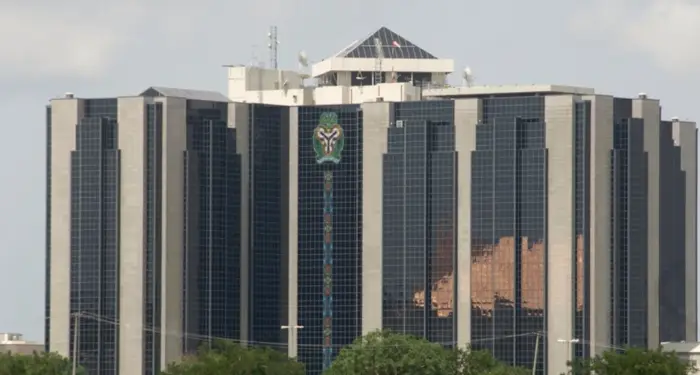
Stricter lending looms as CBN’s capital restoration deadline ends
As the deadline for the Capital Restoration Plan expires today, analysts warn banks may adopt stricter lending practices, though the policy is expected to stabilise the financial system in the long run, writes OLUWAKEMI ABIMBOLA Experts have projected that the capital restoration plan mandated by the Central Bank of Nigeria to support banks’ exit from the forbearance regime would have a short-term credit-tightening impact but lead to stability in the long term. Last Monday, the apex bank, in a circular signed by the CBN Director of Banking Supervision, Olubukola Akinwunmi, said the Capital Restoration Plan would complement its other measures, which include termination of forbearance exposure and Single Obligor Limits waivers, suspension of payment of dividends, bonuses, and investment in foreign subsidiaries for affected banks. CBN stated, “All affected banks are required to prepare and submit a comprehensive Capital Restoration Plan to the CBN on or before the 10th working day following the end of the quarter with effect from June 30, 2025. “The plan should detail the management’s proposed strategies to restore full regulatory compliance, including (but not limited to) cost optimisation initiatives, risk asset reduction, significant risk transfers, and necessary business model adaptations. The plan must cover the entire period until full normalisation of capital and asset quality indicators is achieved.” The deadline for submitting the Capital Restoration Plan is Monday (today). In addition, all banks are now required to submit quarterly disclosures, effective June 30, 2025, relating to a detailed provisioning status and reconciliation of affected credit exposures, CAR calculations with and without transitional reliefs, classification migration data for restructured or impacted loan facilities, and comprehensive disclosure of Additional Tier-1 instruments, including issuance terms, usage, and related conditions. This, the Central Bank said, is aimed at enhancing transparency and regulatory oversight. The apex bank also temporarily lifted the current regulatory caps on the recognition of Additional Tier 1 capital in the Capital Adequacy Ratio computation from June 30, 2025, to March 31, 2026. “This adjustment is intended to enhance banks’ capital buffers without compromising long-term capital planning. The temporary lifting of regulatory caps on AT1 recognition is solely for the purpose of supporting capital adequacy and is not a substitute for the ongoing recapitalisation programme,” the circular stated. The analysts at Meristem, in their weekly market report, projected that in light of their new regulatory requirements, banks may adopt a conservative lending stance. “In the near term, banks may adopt more conservative lending practices, tighten risk management frameworks, and intensify cost efficiency efforts. While this could slow credit expansion initially, the broader objective is expected to promote long-term sector resilience and financial well-being. “Going forward, these improved disclosures and more disciplined governance could foster greater investor confidence, repricing Nigerian financial stocks positively and supporting market valuations.” Commenting on the development, the Chief Executive Officer of CFG Advisory, Tilewa Adebajo, said there was cause for alarm. “Banking operates not only at a regional level but also at a global level, and from time to time there is a review of banking standards and practices, which has to do with capital adequacy and capital ratios. In the banking system in Nigeria, there’s an organised recapitalisation programme that is in place. Some banks have already gone to the markets on their first stage and have met all their first-stage capital-raising requirements. Everybody is going, each bank is adopting its unique strategy, and this is an ongoing process, but with the circular, the Central Bank is taking a different step in terms of moving the process along,” he said. He noted that banks had enjoyed relaxed regulations during the pandemic, which needed to be brought under control now: “During COVID, there was a lot of forbearance not only in Nigeria but globally within the banking systems to be able to help banks cushion the effect of that very unique phenomenon. One of the biggest items was the issue of the single obligor. Banks are supposed to be able to lend to companies based on their capital; some banks have exceeded that, and right now, what the Central Bank is saying is COVID is over now, and we’re cleaning up the books, and we’re going through a recapitalisation process. “As part of this recapitalisation, we’re moving things back to normal. So, they’ve announced that the forbearance on single obligor limits no longer exists, and banks have to regularise that going forward.” Adebajo maintained, “This is a process that is in place; there’s no cause for panic, there’s no cause for alarm, and it’s just a process that will end when the banks complete their recapitalisation plan. So, the plan is that by the time the banks have concluded their capital-raising exercises, all these legacy issues within the system should have disappeared. “The exercise will strengthen the system. Banks are raising more capital, and I’ve said that eventually, banks have to continuously raise capital. Do you remember when we started with the N25bn? Now we’re a long way off the N25bn. It’s a continuous process, and I think this will only help to strengthen the banking system
Read MoreCBN to decide Nigeria’s interest rate policy on July 22 MPC meeting
by Israel Ojoko The Central Bank of Nigeria (CBN) has announced that the 301st meeting of the Monetary Policy Committee (MPC), the country’s apex decision-making body on interest rate policy, will be held on Monday, July 21, and Tuesday, July 22, 2025, at its headquarters in Abuja. According to an official notice, the meeting will commence at 10:00 a.m. on July 21 in the MPC Meeting Room at the CBN headquarters. The two-day deliberation will culminate in an official announcement by CBN Governor Olayemi Cardoso, who will disclose the committee’s policy decisions on Tuesday, July 22. This upcoming meeting comes amid growing expectations from financial analysts and investors seeking signals on Nigeria’s monetary direction, especially in light of global economic uncertainties and local inflationary trends. Review of Last MPC Meeting At the 300th MPC meeting held in May 2025, the CBN opted to maintain a conservative stance, keeping the Monetary Policy Rate (MPR) unchanged at 27.5%. The decision underlines the Bank’s commitment to balancing price stability with gradual economic recovery. Other key resolutions from the May meeting included: Asymmetric Corridor: Retained at +500/-100 basis points around the MPR Cash Reserve Ratio (CRR): Held at 50% for Deposit Money Banks and 16% for Merchant Banks Liquidity Ratio: Maintained at 30% The vote was unanimous, with all 12 MPC members supporting the retention of existing rates, citing the need to monitor the effectiveness of current policies before making further adjustments. “By maintaining current rates, the Bank is giving room for existing policies to yield results before implementing further changes,” the CBN had stated following the May session. Policy Expectations and Market Outlook Analysts suggest that the July meeting may lead to a policy shift, depending on recent macroeconomic indicators, including inflation levels, foreign exchange stability, and GDP growth forecasts. The MPC’s decisions are closely watched for their impact on borrowing costs, investment flows, and Nigeria’s overall economic outlook. Whether the Bank chooses to maintain, hike, or reduce rates will send critical signals to both local and international stakeholders.
Read More