Raising interest rate to 27.75% painful for borrowers, Cardoso admits
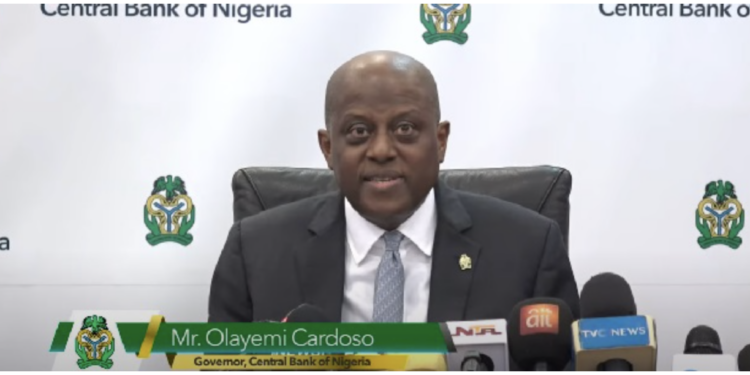
Credit to Nairametrics The Governor of the Central Bank of Nigeria (CBN), Yemi Cardoso, has acknowledged that the rise in the interest rate to 27.25% is “painful” for borrowers but stressed that the decision is necessary to reduce excess money in circulation and control inflation effectively. Cardoso made this statement while addressing members of the Harvard Club of Nigeria in Lagos at the weekend on the topic: “Leadership in Challenging Times: Restoring Credibility, Building Trust, and Containing Inflation”. The CBN chief stated that the apex bank understands that leadership involves making difficult decisions aimed at ensuring long-term stability, rather than focusing on short-term comfort. He further emphasized that the bank must remain focused on its core mandate of ensuring price stability, rather than being swayed by political and economic pressures. “Our decision to raise the Monetary Policy Rate (MPR) to 27.25% was a bold move. Higher interest rates, while painful for borrowers, are necessary to curb excess money in circulation and control inflation. “Leadership is about making hard choices to secure long-term stability over short-term comfort in moments like these “Leading through challenging times means avoiding the temptation to take on too many initiatives. The Central Bank must focus on its core mandate—price stability. It is easy to become distracted by various political and economic pressures, but as a leader, one must prioritise,” Cardoso said. Building back trust in CBN Furthermore, Cardoso explained that the focus of the new leadership at the CBN is on rebuilding trust in the markets and the system. He added that this commitment is the reason behind the emphasis on policy transparency and the adoption of the Electronic Foreign Exchange Matching System (EFEMS) for foreign exchange transactions. According to Cardoso, these efforts have led to a reduction in arbitrage and speculation in the market, as trust is gradually being restored among participants. “Trust is the currency of central banking. If the public loses trust in the institution, the efficacy of its policies diminishes. “Our decision to implement the Electronic Foreign Exchange Matching System (EFEMS) is rooted in this understanding. “By enhancing transparency and providing more accurate oversight of forex transactions, we send a strong signal that the CBN is serious about fair and efficient markets,” Cardoso said. What you should know Nairametrics reported that as of July 2024, only 36.3% of Nigerian households supported raising interest rates to control inflation. The survey further revealed that 50.6% of respondents preferred a reduction in interest rates despite the rising inflation, while 13.1% remained undecided. This division underscores the challenge faced by the Central Bank of Nigeria’s (CBN) Monetary Policy Committee (MPC) in balancing inflation control with public demand for lower borrowing costs. Under Yemi Cardoso’s leadership, the CBN’s MPC has implemented five interest rate hikes. The initial increase took the rate from 18.75% to 22.75%, followed by subsequent hikes to 24.75%, 26.25%, and then, in July 2024, a 50 basis point increase to 26.75%. Recently, the MPC raised the rate by an additional 50 basis points, reaching 27.75%. These hikes, accumulating to over 800 basis points since Cardoso’s tenure began, aim to address Nigeria’s ongoing inflation issues, particularly high core and food inflation.
Read More
Taxes paid by traders, mechanics rise by 49% in 2024 amid economic challenges
Credit to Nairametrics Taxes paid by Nigerians involved in the wholesale and retail trade, as well as the repair of motor vehicles and motorcycles, surged by 49% in the first six months of 2024 compared to the same period last year. This is according to data from the tax reports of the National Bureau of Statistics (NBS). Based on the data released by the NBS, this leap in tax revenue is the result of hikes in both Value Added Tax (VAT) and Company Income Tax (CIT) receipts. He further emphasized that the bank must remain focused on its core mandate of ensuring price stability, rather than being swayed by political and economic pressures. “Our decision to raise the Monetary Policy Rate (MPR) to 27.25% was a bold move. Higher interest rates, while painful for borrowers, are necessary to curb excess money in circulation and control inflation. “Leadership is about making hard choices to secure long-term stability over short-term comfort in moments like these “Leading through challenging times means avoiding the temptation to take on too many initiatives. The Central Bank must focus on its core mandate—price stability. It is easy to become distracted by various political and economic pressures, but as a leader, one must prioritise,” Cardoso said. Building back trust in CBN Furthermore, Cardoso explained that the focus of the new leadership at the CBN is on rebuilding trust in the markets and the system. He added that this commitment is the reason behind the emphasis on policy transparency and the adoption of the Electronic Foreign Exchange Matching System (EFEMS) for foreign exchange transactions. According to Cardoso, these efforts have led to a reduction in arbitrage and speculation in the market, as trust is gradually being restored among participants. “Trust is the currency of central banking. If the public loses trust in the institution, the efficacy of its policies diminishes. “Our decision to implement the Electronic Foreign Exchange Matching System (EFEMS) is rooted in this understanding. “By enhancing transparency and providing more accurate oversight of forex transactions, we send a strong signal that the CBN is serious about fair and efficient markets,” Cardoso said. What you should know Nairametrics reported that as of July 2024, only 36.3% of Nigerian households supported raising interest rates to control inflation. The survey further revealed that 50.6% of respondents preferred a reduction in interest rates despite the rising inflation, while 13.1% remained undecided. This division underscores the challenge faced by the Central Bank of Nigeria’s (CBN) Monetary Policy Committee (MPC) in balancing inflation control with public demand for lower borrowing costs. Under Yemi Cardoso’s leadership, the CBN’s MPC has implemented five interest rate hikes. The initial increase took the rate from 18.75% to 22.75%, followed by subsequent hikes to 24.75%, 26.25%, and then, in July 2024, a 50 basis point increase to 26.75%. Recently, the MPC raised the rate by an additional 50 basis points, reaching 27.75%. These hikes, accumulating to over 800 basis points since Cardoso’s tenure began, aim to address Nigeria’s ongoing inflation issues, particularly high core and food inflation. [the-post-grid id=”3289″ title=”Media News”]
Read More